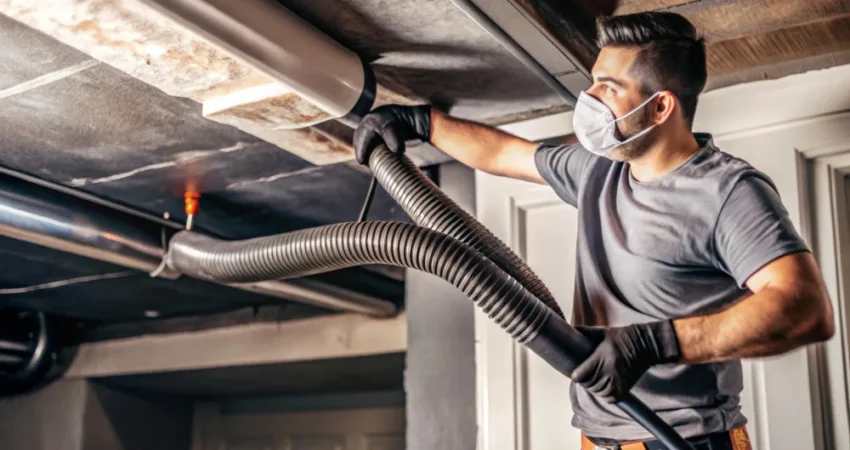
Top Ways to Improve Indoor Air Quality in UAE Homes: The Role of AC Duct Sanitization
When the air conditioning runs for long stretches and the windows stay closed, much of the air you breathe at home is air your AC system moves around. The good news is that most ways to improve indoor air quality are simple and inexpensive. Some involve your AC system, and a few may call for professional help.
This guide covers what affects the air inside your home, the everyday steps that make a difference, and where AC duct cleaning and sanitization fit in, including when they are worth considering and when they are not.
What Indoor Air Quality Means and Why It Matters
Indoor air quality describes how clean and comfortable the air inside a building is, based on the pollutants, moisture and particles it contains. Common factors that affect it at home include:
- Dust and fine particles brought in from outside or created indoors
- Poor ventilation, which lets pollutants build up instead of being diluted with outdoor air
- Excess moisture, which can encourage mould and other biological growth
- Indoor pollutant sources, such as smoking, some cleaning products, paints and cooking fumes
Because conditions vary from home to home, the right mix of steps depends on your property, your AC system and how you use the space.
Practical Ways to Improve Indoor Air Quality in UAE Homes
The US Environmental Protection Agency (EPA) describes three basic strategies: control pollution at its source, improve ventilation, and use air cleaning and filtration. You can read more in the EPA’s indoor air quality guidelines.
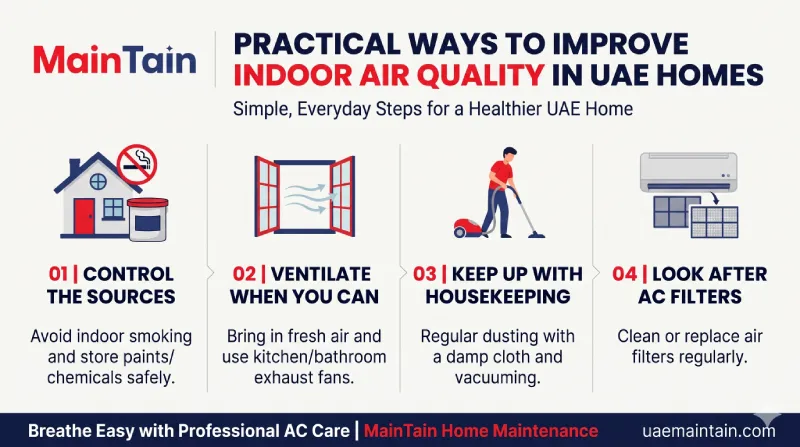
Control the Sources
The EPA says source control is usually the most effective way to improve indoor air. In practice, that means avoiding smoking indoors, storing paints and chemicals properly, and choosing products with care.
Ventilate When You Can
The EPA notes that most home heating and cooling systems do not mechanically bring fresh air into the house. Using kitchen and bathroom exhaust fans and airing rooms out when outdoor conditions allow can help dilute indoor pollutants.
Keep Up With Housekeeping
Housekeeping is one of the easiest ways to improve air quality in home spaces. Regular dusting with a damp cloth and vacuuming help reduce the dust that settles on surfaces and ends up circulating through the home.
Look After Your AC Filters
The EPA recommends using the highest-efficiency filter that your system’s manufacturer recommends and changing filters regularly. How often depends on your unit, the filter type and how much dust your home sees, so follow the manufacturer’s guidance.
The Role of AC Duct Sanitization and Duct Cleaning
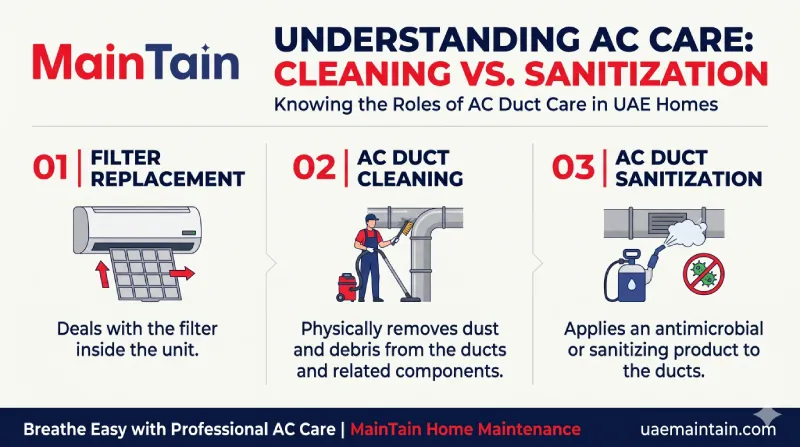
Air ducts can collect dust, debris and, in some cases, other contaminants over time. It helps to separate three jobs that are often confused:
- Filter cleaning or replacement deals with the filter inside the unit.
- AC duct cleaning physically removes dust and debris from the ducts and related system components.
- AC duct sanitization applies an antimicrobial or sanitizing product to the ducts, usually after cleaning.
Routine AC maintenance, which covers how the unit itself is working, is another separate service. For a fuller comparison, read our article on the difference between AC duct cleaning and AC maintenance.
When Duct Cleaning May Be Worth Considering
According to the EPA, cleaning may be worth considering when there is substantial visible mould inside hard-surface ducts, when ducts are infested with insects or rodents, or when they are clogged with excessive dust and debris. The EPA does not recommend routine duct cleaning outside those situations, and notes that duct cleaning has never been shown to prevent health problems.
What to Know About AC Duct Sanitization
Sanitization should be approached with care. The EPA advises against allowing chemical biocides or treatments unless you fully understand the pros and cons, as research has not shown how effective they are in duct cleaning. Before agreeing to sanitization, ask what product will be used, why it is needed and whether it is suitable for your duct material.
Sanitization is not a fix for every air quality problem. If moisture or a leak is causing growth, that cause needs to be addressed first.
Moisture, Mould and Your AC System
The EPA says the key to mould control is moisture control. Its guidance includes:
- Keeping indoor humidity below 60%, ideally between 30% and 50%, where possible
- Fixing plumbing leaks and water problems as soon as possible
- Drying water-damaged areas and items within 24 to 48 hours
- Keeping AC drip pans clean and drain lines unobstructed and flowing properly
If you see or smell mould, or notice recurring damp patches, find the source of the moisture before cleaning or treating the affected area.
Signs Your AC System May Need Professional Attention
You may want a professional inspection if you notice:
- Dust blowing from vents soon after cleaning
- Visible mould around vents or inside accessible parts of the system
- Persistent musty smells when the AC runs
- Signs of insects or rodents in or near the ductwork
- Water leaking from the indoor unit or a blocked drain line
An inspection helps you understand whether the issue is the filter, the unit, the ducts or a moisture problem, before you pay for any treatment. To learn more about the service, see our guide to ac duct cleaning abu dhabi.
MainTain provides home maintenance services in Abu Dhabi. If you have concerns about your AC system or indoor air, contact the team to discuss what your home needs.
Conclusion
The most effective ways to improve indoor air quality usually start with the basics: control pollutant sources, ventilate where you can, keep filters in good condition and manage moisture. Duct cleaning and AC duct sanitization have a place when there is a clear reason for them, such as visible mould, pests or heavy debris, but they are not a cure-all. If you want to improve air quality in home settings without guesswork, an inspection is a sensible first step before any treatment.
Frequently Asked Questions
1. What are the simplest ways to improve indoor air quality at home?
Start by controlling pollution sources, such as smoking and harsh chemicals, and use exhaust fans to improve ventilation. Clean regularly, change AC filters as the manufacturer recommends, and keep humidity in check to discourage mould growth.
2. Is ac duct sanitization necessary for every home?
No. Sanitization is not a routine requirement. The EPA advises against chemical treatments unless you fully understand their pros and cons. Ask a professional to inspect your system and explain why a treatment is needed first.
3. How can I improve air quality at home without professional help?
Many steps need no professional help. Dust with a damp cloth, vacuum regularly, ventilate when conditions allow, avoid indoor smoking, store chemicals safely, change AC filters on schedule and fix any leaks or damp areas quickly.
4. How do I know if my AC ducts need cleaning?
The EPA suggests considering cleaning if hard-surface ducts show substantial visible mould, signs of insects or rodents, or excessive dust and debris. AC duct sanitization should only follow if an inspection shows a clear need.
5. Does AC duct cleaning stop mould coming back?
Not on its own. The EPA says controlling moisture is the most effective way to prevent biological growth in ducts. To improve air quality in home settings, fix leaks, keep drain lines clear and manage humidity too.